


Feminist Futures Gallery
This year, the gallery is taking part in a reflection on feminist democracy. It is a political framework that reassesses and reshapes democratic systems in order to dismantle gender hierarchies and structural inequalities. Feminist democracy goes beyond the fundamental right to vote guaranteed by law to ensure substantive equality, incorporating the ethics of care, intersectional representation and the redistribution of power in public and private life. Feminist theory is often criticized for being too theoretical and politically detached from the grassroots. We therefore aim to contribute to breaking down prejudices and preconceptions by bringing together a diverse group of artists and performers and fostering an open and constructive exchange of practice, knowledge and mutual support.
OPENING
Monday, 14 September 2026, 6pm
Foyer, Cultural Centre Protagon
In the presence of the artists
PERFORMANCES UND HAPPENINGS
Reading with Katarina Kloppe and short film screening by Ira Rogava, 14 September, 6 pm
Open Studio: Workshop with Caroline Bang, 15 September, 5–7 pm
Artists:
Camila Puerto – #NoMeMiresLeeme
Caroline Bang – Textile Beings
verwilderte fasern kollektiv – Tentacles
Irina Rogava – Nie wieder, oder?
Katarina Kloppe – Die eigene Geschichte ist niemals singulär
Terezinha Malaquias – Schau mich an
Curated by Effi Bodensohn and Anna D’Errico.
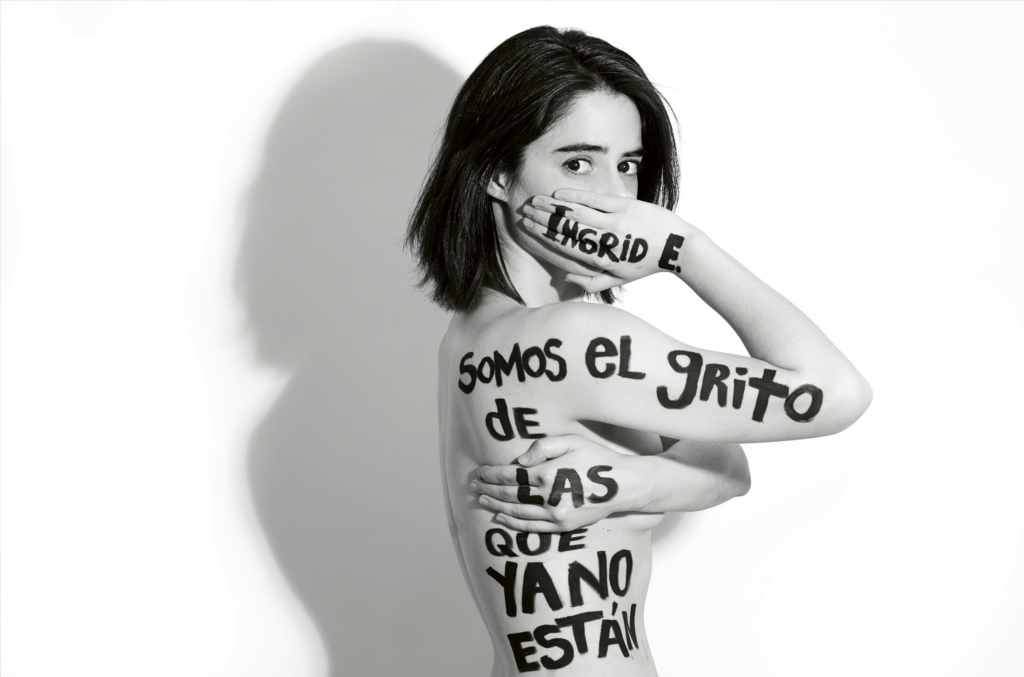
Camila Puerto was born in Colombia in 1993. In 2000, she moved to Mexico City with her parents and her sister. From 2012 to 2016, she studied theater studies at the Universidad de las Américas Puebla (UDLAP) and in 2019 she completed a specialization in set design at “CENTRO diseño, cine y TV”. Since then, she has worked as an actress and has appeared in more than ten theater productions, music videos, and short films that have been screened at national and international film festivals. She has also appeared in television and Netflix series. From 2018 to 2019, she was co-producer and designer of the short comedy pieces “Barbie World” and “Sensual Fantasy”. Since January 2020, she has also been training in acting and theater anthropology at Odin Teatret. Puerto is the initiator and director of the project #NoMeMiresLeeme, a photographic campaign against gender-based violence in Mexico, which was published online on International Women’s Day 2020.
Website/IG
#NoMeMiresLeeme
#NoMeMiresLeeme
Camila Puerto
#NoMeMiresLeeme 2023 is a Photographic Movement against gender violence around the world. This has been possible thanks to the collaboration of women artists from different disciplines – actresses, directors, playwrights, activists, and theater scholars – and countries – Kurdistan, Morocco, Taiwan, Argentina, Colombia, Germany, the UK, Romania, and others.
It is a collection of 30 photographs in which each artist expresses her discourse through writing on her body. The text is based on the story of each of these 30 women in relation to gender violence and/or based on what they wanted to communicate about what it means to be a woman in their context regarding nationality, tradition, religion, migration, family, etc. Each woman wrote the words in her first language and decided how she wanted her photograph to be taken. It is all part of the discourse.
The movement was born on March 8th, 2020 at noon, when a collection of 33 photographs was shared on Instagram and Facebook, protesting against gender violence in Mexico, where 10 women are murdered every day. It was created by Mexican actresses, photographers and make-up artists who went online under #NoMeMiresLeeme. The Movement spread and reached many women from different states in Mexico, who joined by using the hashtag.
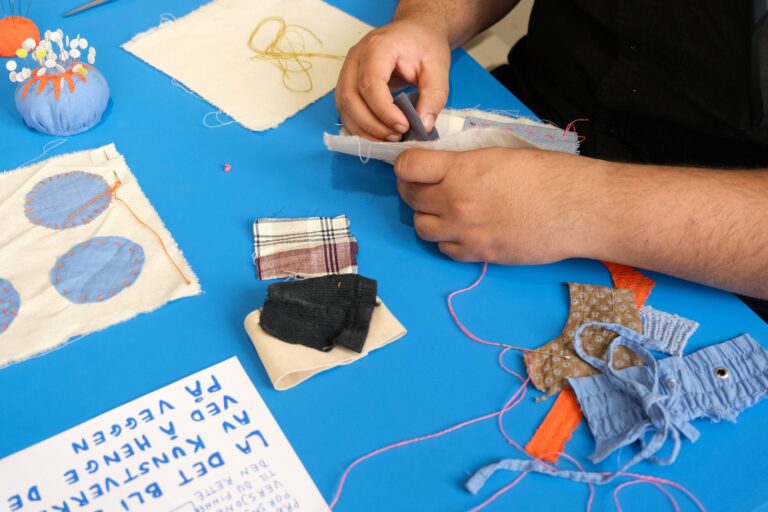
Caroline Bang (she/her) is a Danish scenographer and textile artist based in Aarhus, Denmark, educated at the Norwegian Theatre Academy and HfBK Dresden. Her work spans theatre, performance, participatory installations and exhibitions. With a deep fascination for textile materiality and craft, she combines artistic practice with ecological thinking and critical reflections on global textile production. Her work often brings together craft, science and collective processes to create spaces of care, attention and collaborative creation.
Website/IG
Textile Beings
Caroline Bang
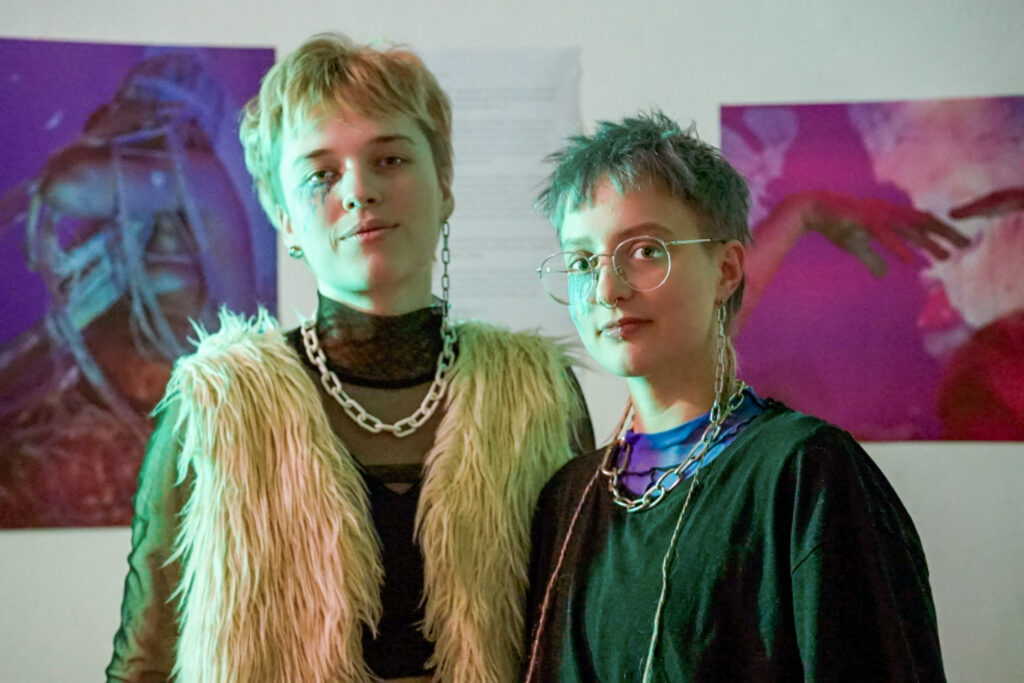
For us, verwilderte fasern (feral fibres) symbolises growth, overgrowth, the wild, the strange, the colourful and the disorderly; coming together in solidarity to form something new. The collective consists of two queer and trans* artists from Frankfurt/London. Sometimes our fibres branch out and bring other artists and collaborators on board. These are the moments we love the most. Using theatre, installation, spoken word, video and contemporary dance is our way of exploring themes that are personally relevant to us, such as discrimination, mental health, relationships, sexuality and (queer) empowerment. Our works have already been performed at the Café des Merveilles in Paris, the Museum of Applied Arts, the Sommerwerft Festival, the Womxns’ Theater Festival and the implantieren Festival in Frankfurt, as well as at the Württembergischer Kunstverein in Stuttgart and the ZeitZeug Festival in Bochum.
Website/IG
Tentacles – an installation on queer anger
Verwilderte Fasern
“Women who are not cisgender, not heterosexual, not white are under constant pressure to prove their gentleness and, by extension, their femininity. They must prove that they are not hateful, not angry, not destructive, not dominant – in short, not masculine – in order to be recognised as human.” (Šeyda Kurt)
The performative installation format explores anger as a deep-sea creature: slimy, tentacled, fascinating rather than menacing. In their photo series, the artists themselves transform into monsters of anger – slippery skin, sticky hair, absurd chimeras made of flesh, plastic and threads, bathed in surreal underwater light. The starting point is the question of who is labelled a ‘monster’: often queer people, whose resistance to exclusion is stylised as a threat. The installation explores anger that is suppressed from an early age – and invites the audience to collectively (re)claim this power, which is often “banished into the darkness”
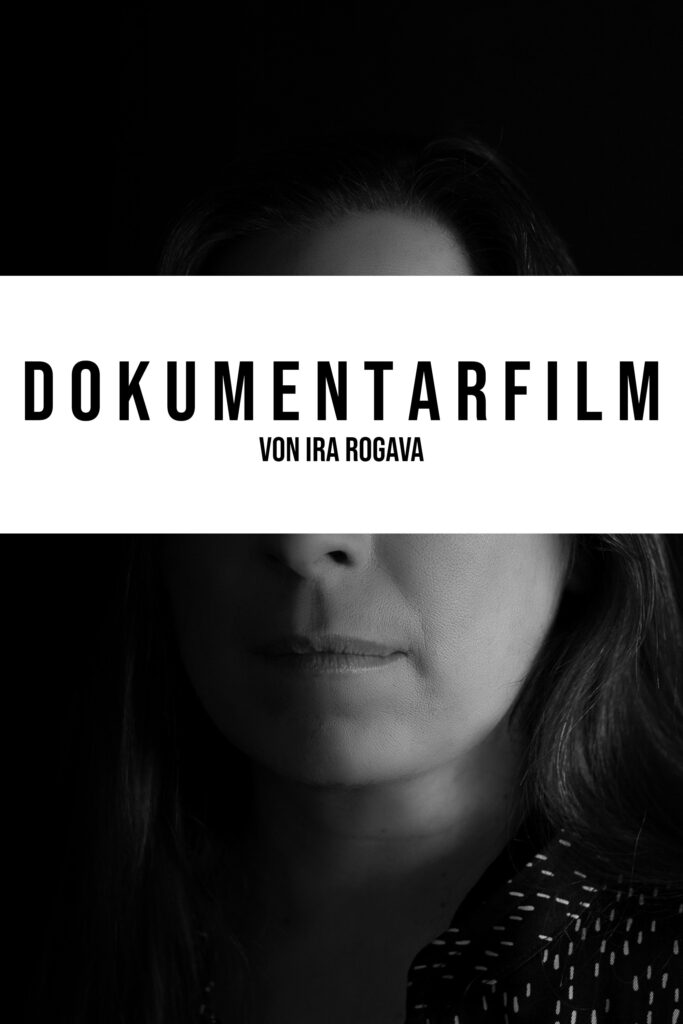
Ira Rogava is a photographer, filmmaker, and visual storyteller based in Frankfurt am Main. For more than fifteen years, she has worked in photography, documentary film, and multimedia projects, exploring themes of identity, social justice, and human stories. Today, her artistic practice focuses on migration, belonging, and discrimination. Combining
photography, video art, and documentary storytelling, she creates projects that enable people to speak in their own voices. Her work brings personal stories into the public sphere, fostering dialogue, mutual understanding, and empathy.
Website/IG
Nie wieder, oder?
Irina Rogava
Nie wieder, oder? is a multimedia installation exploring contemporary experiences of discrimination in Germany through photography, documentary film, and personal testimonies. The complete project brings together fourteen black-and-white portraits and video interviews with people of different ages, backgrounds, and life experiences. For the Feminist Futures Gallery, a selection of the project is presented: six female portraits and video stories that create a shared space of images, voices, and personal narratives. Through their memories and experiences, the participants speak about different forms of discrimination, invisibility, and the search for belonging. The installation invites visitors not only to look, but also to listen, creating a space for dialogue, empathy, and reflection on prejudice and exclusion in contemporary society.
Katarina Kloppe (1993) is an artist, art historian, and writer. Her interdisciplinary practice explores the construction of memory, as well as the history of queer visibility and representation in film and literature. She lives and works in Cologne.
Website/IG
Singularities
Katharina Kloppe
For centuries, speech and writing have been important tools for transmitting, exercising and negotiating power. Knowledge is preserved and shapes the writing of history. But who shares what information, and how? Who has access to this information?
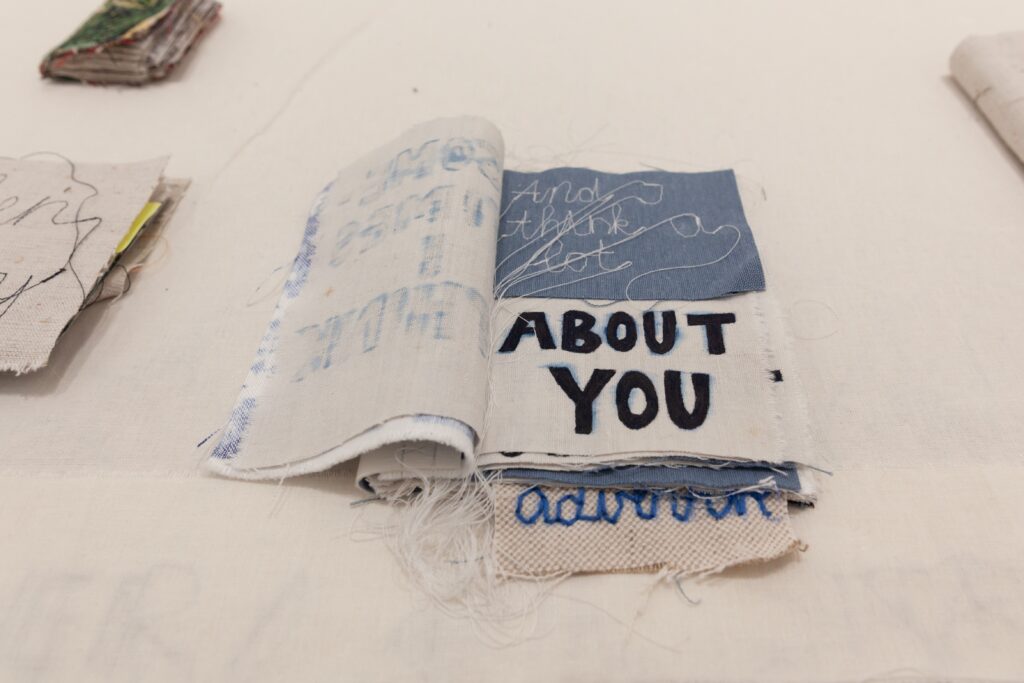
Queer stories, in particular, have often been—and continue to be—subject to censorship and suppression. In response, forms of coding emerged: through allusions, gaps, ciphers, and ambiguities. Thus, writing does not only become a repository of knowledge but also a medium of concealment and rediscovery—a space where meaning can unfold between the lines.
The textile books explore these interstices. Threads, fabrics, and seams become vessels of memory and narrative. The book is not merely an object but a place where touch, material, and writing converge—and where hidden stories are inscribed.
Installation with reading on 14 September 2026, 6 pm during the Opening
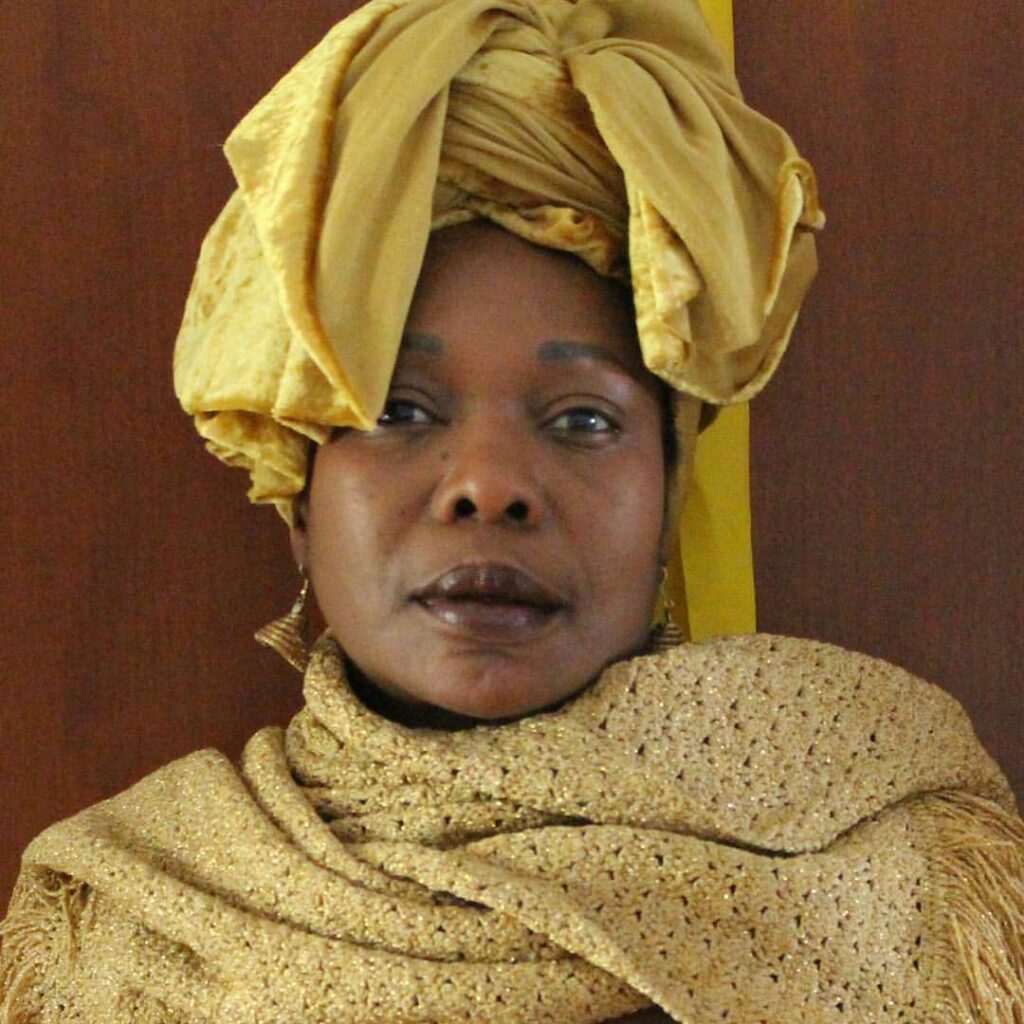
Terezinha Malaquias was born in Frutal, Minas Gerais, Brazil, but considers herself a *Paulistana*; São Paulo is the city closest to her heart. She has lived in Freiburg im Breisgau since 2008, where she trained as a sculptor at the Edith Maryon Art School.
In Brazil, she studied theater and performance and worked professionally as an actress, taking on roles that included minor parts in telenovelas. She is also the author of 13 published books, all written in Portuguese; five of these have been translated into German, and one into English.
Website/IG
Schau mich an
Terezinha Malaquias
In her ongoing series of photo-performances and self-portraits, *Schau mich an… / Look at Me…*, Terezinha Malaquias explores identity, visibility, and the politics of looking. As an Afro-Brazilian woman, life model, and migrant living in Germany, she uses her body, colorful fabrics, everyday objects, and wearable art to challenge stereotypes and reflect on how women—particularly Black women—are seen and represented.
The series invites viewers to look beyond the surface and perceive the many stories, experiences, and identities that every body carries within it. In her images, Malaquias transforms the act of being seen into an affirmation of presence, dignity, and self-determination.